


AI Research
The Expertise Behind Reliable, Fair and Compliant AI
Credibility does not solely come from theory, but from studying and applying proven methods to real-world challenges. We are involved in cutting-edge research and are sought-after partners in European and Austrian consortia when it comes to designing, evaluating, and testing high-performance AI systems.
What sets us apart is that we combine technological expertise in data science and data engineering with social science research, regulatory expertise, and domain knowledge specific to AI application contexts. Quality assurance, impact, and risk analyses are still in their infancy in the field of AI, and our goal is to be a frontrunner in this area through continuous research.
Key Dimensions of Human-Centered AI
We research, develop methods for and evaluate each part of trustworthy AI, both pre- and post-deployment.
-
Many AI systems are inherently opaque. This makes it difficult to monitor them and deploy them in high-risk environments.
We are researching how the inner workings of various AI systems can be made transparent and understandable and documented for the respective user groups and decision-making contexts.
-
Unintended bias and stereotyping by AI systems is one of the biggest unresolved challenges. We specialize in detecting and effectively reducing AI bias.
We investigate which groups of people are affected by fairness issues and how effective detection and testing methods across population subgroups can work to make AI trustworthiness a measurable standard—rather than a vague hope.
-
We develop evaluation frameworks for accuracy, reproducibility and predictability across varied conditions and population subgroups.
Our research includes simulation methodologies using synthetic data to stress-test AI systems before live deployment.
-
Based on qualitative social research, we examine how AI systems impact fundamental rights, democratic processes, labour relations, and consumer autonomy.
This research directly informs our impact and risk assessment methods and is incorporated into the fairness dimensions we develop for specific sectors.
-
We research the implications of EU legislation, including the AI Act, GDPR and sector-specific regulations, for system design and deployment.
We also investigate data sovereignty, EU-based hosting and the conditions under which organizations can reduce dependence on non-European AI infrastructure.
Technical
NLP & Language Models
Large language models, text classification, generation quality and linguistic bias in multilingual contexts
Research Areas
Technical
Agentic Systems
Autonomous AI agents, multi-step decision-making and the governance challenges they introduce.
Technical
Computer Vision
Image analysis, object recognition and bias in visual AI — particularly in high-stakes applications.
Social Science
Fairness Dimension Development
Qualitative methods for identifying and operationalizing fairness criteria in specific use-case contexts.
Social Science
User Needs & Human Factors
Understanding how affected groups experience AI systems — and what requirements that generates for design.
Method
Evaluation & Testing Methodology
Developing benchmarks, thresholds and testing procedures for both pre-deployment and post-deployment contexts.
-
A European standard being developed by CEN-CENELEC to define concepts, measures, and requirements for assessing and mitigating bias in AI systems.
-
ISO/IEC 12792: This standard establishes the first globally standardized taxonomy for artificial intelligence transparency. It outlines structured information elements that help organizations communicate AI capabilities, risks, and design decisions, defining how information is shared across supply chains, to end-users, and with regulators.
-
HUDERIA is the Council of Europe's framework for assessing the impact of Artificial Intelligence systems on human rights, democracy, and the rule of law. It serves as a practical guide for governments and developers to evaluate and mitigate the societal risks associated with AI.
-
The EU AI Act is the world’s first comprehensive legal framework for artificial intelligence, enacted by the European Union to ensure that AI systems are safe, transparent, non-discriminatory, and respect fundamental rights. It applies to any developer, deployer, or distributor whose AI systems are placed on the EU market or affect EU citizens.
Standards included here are EN 18286 (Quality Management), EN 18228 (Risk Management), EN 18284 (Data Quality and Governance), EN 18229 - 2 (Transparency), and EN 18229-4 (Accuracy).
Standards and regulations we work with or contribute to:


Skills & Methods We Apply
Fairness Auditing
Impact Assessment Frameworks
Bias Detection & Measurement
Benchmark Development
Subgroup Performance Analysis
Interpretability Methods
Synthetic Data Simulation
AI Use Case and User Research
Regulatory Mapping
Documentation & Audit Preparation
Working Accross Different Sectors
-
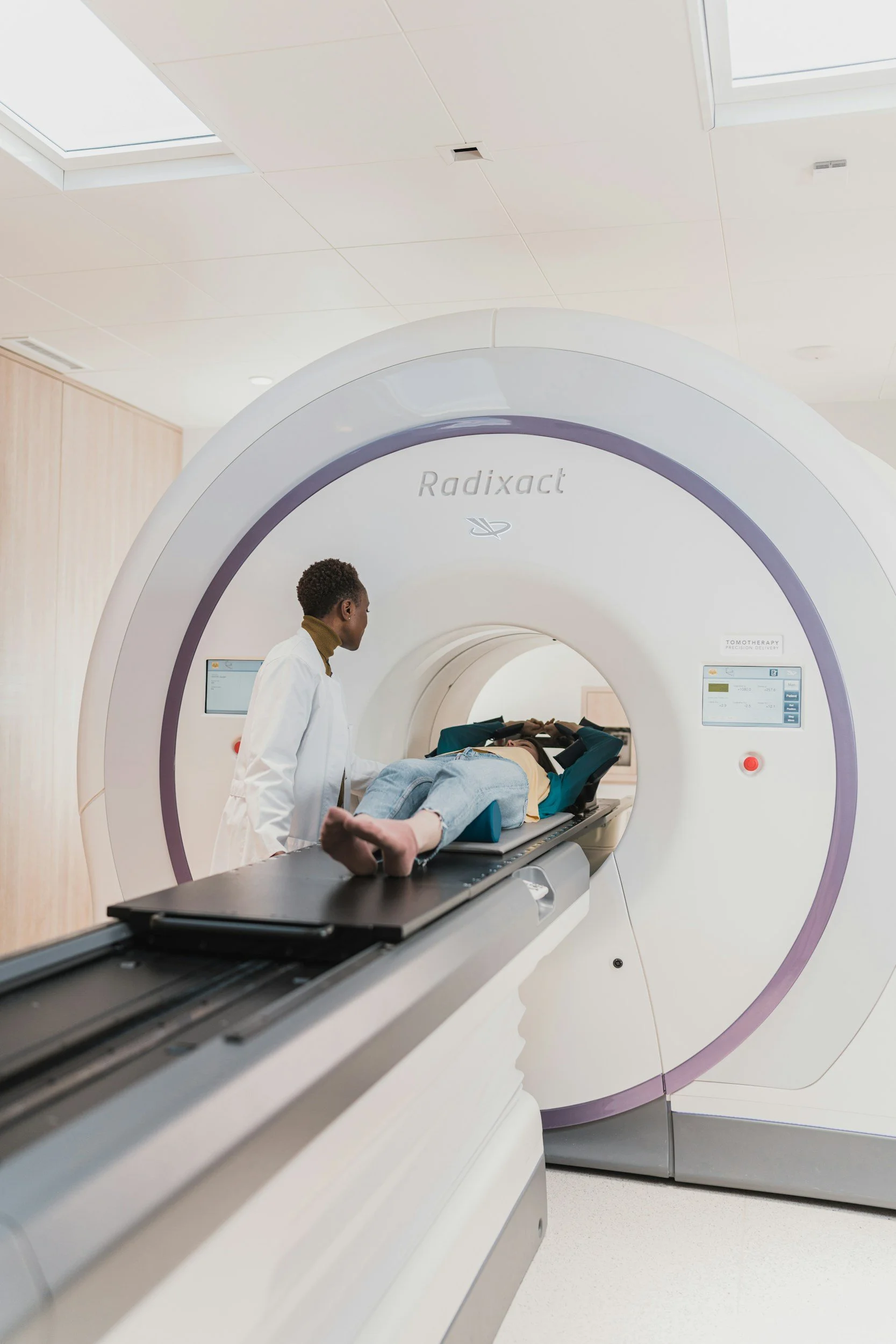
Computer vision and natural language processing have made significant strides in the healthcare sector and are influencing diagnoses, treatments, and care that people receive.
To be effective while protecting lives, these technologies must be secure, reliable, and compliant, and this is exactly where leiwand.ai supports health tech developers, hospitals, doctors, and outpatient clinics.

-
AI is already widely deployed for claims and damage assessment, real-time fraud detection, credit scoring, and regulatory reporting automation. AI systems in European banks and insurers need to be accurate, auditable and privacy-preserving to ensure that customers’ rights and well-being are secured.
leiwand.ai helps financial institutions evaluate their AI models for bias, robustness, and compliance, ensuring they meet both technical and sovereign data requirements.

-
When AI decides who gets an interview, unchecked bias can translate into discrimination against certain groups. This is affecting real careers and exposes organizations to legal and reputational risk.
We provide independent bias management for recruitment AI, so that hiring decisions assisted by algorithmic systems can be effective, useful, and trusted.

-
The mobility sector leverages AI systems for autonomous driving, route and load planning or predictive maintenance for trains, buses, and shared mobility solutions. Especially safety-critical solutions must undergo rigorous validation.
leiwand.ai helps Original Equipment Manufacturers (OEMs), suppliers, and transport agencies ensure their AI models are robust, explainable, ensure in-cabin data protection and are on overall compliant with European standards.

-
Government agencies and the judiciary are increasingly using AI systems as internal digital assistants, to provide information to citizens via chatbots, or to review applications. These processes are increasingly subject to very high standards.
leiwand.ai ensures that results are accurate and generated in compliance with strict data protection, non-discrimination and sovereignty requirements.
-
Whether it’s actively monitoring the condition of energy grids and transportation infrastructure, predicting energy consumption, or smart traffic management, AI systems are playing an increasingly important role for public and private infrastructure operators and providers.
leiwand.ai supports operators of critical infrastructure in testing AI systems for reliability and compliance with the AI act and sector-specific regulations, ensuring both safety and digital sovereignty.

Project Portfolio
Now that we have shown what we offer, its time to show you what we have done. Check out our previous projects to get a glimpse of the variety of work we have done.

leiwand.ai is part of the two-year NoLeFa-84 Project, which aims to support the rollout of the EU AI Act by laying the groundwork for AI testing facilities on behalf of the EU.
NoLeFa-84

The Austrian Lab for AI Trust (ALAIT) seeks to strengthen society's trust in AI through transparency and information.