


Human-centered AI by design
For AI that is reliable, fair and compliant
We help organizations develop, deploy and govern AI systems responsibly along the entire AI system lifecycle - independent, research-driven and grounded in European values.

Between utility and liability
AI systems influence decisions, operations and people on a grand scale and are rapidly being deployed and integrated into organisations across all sectors.
However, using AI without a plan or purpose can lead to unforeseen failures, high costs, discrimination and reputational damage.
We make sure that organisations developing and deploying AI systems understand exactly what they're working with and know how to apply the technology to their specific needs.
What we do
Our three interconnected service areas are available to both AI developers and deployers as individual modules or as an integrated program.
We guide organisations developing artificial intelligence systems in achieving high quality and compliance, while assisting companies, non-profits and public administrations in the safe, effective and profitable use of AI.

AI System Evaluation
Independent assessments of AI systems — before and after deployment. We test for impact, bias, quality and compliance, and deliver findings you can act on.

AI Governance
Transparency, structure, accountability and control for AI systems across your organization, from strategy and use case definition to compliance and risk management.

AI Research
Research on algorithmic bias, fundamental rights impacts of AI systems, and reliability and robustness assessments of the latest generation of AI system.
Working accross different sectors
-
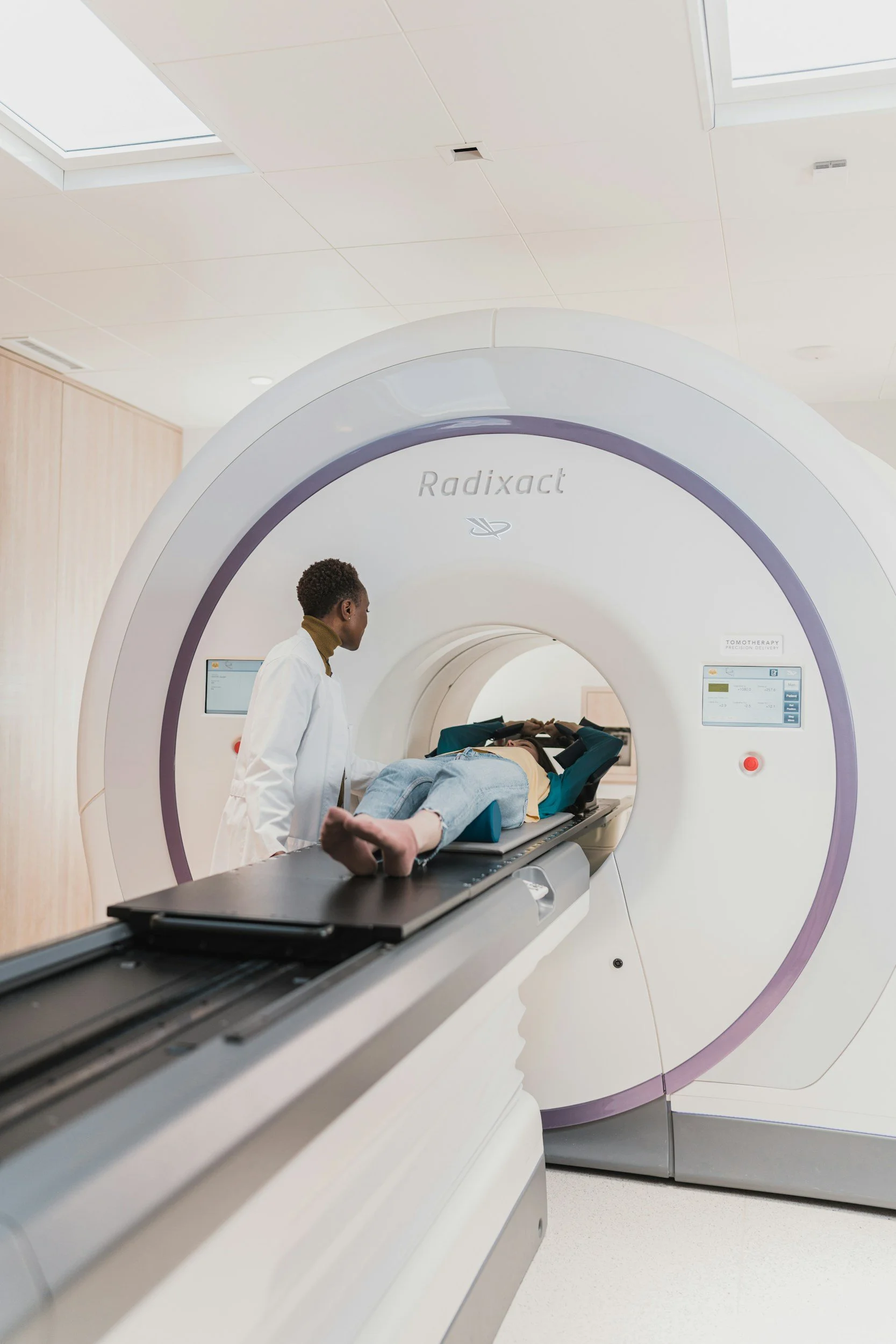
Computer vision and natural language processing have made significant strides in the healthcare sector and are influencing diagnoses, treatments, and care that people receive.
To be effective while protecting lives, these technologies must be secure, reliable, and compliant, and this is exactly where leiwand.ai supports health tech developers, hospitals, doctors, and outpatient clinics.

-
AI is already widely deployed for claims and damage assessment, real-time fraud detection, credit scoring, and regulatory reporting automation. AI systems in European banks and insurers need to be accurate, auditable and privacy-preserving to ensure that customers’ rights and well-being are secured.
leiwand.ai helps financial institutions evaluate their AI models for bias, robustness, and compliance, ensuring they meet both technical and sovereign data requirements.

-
When AI decides who gets an interview, unchecked bias can translate into discrimination against certain groups. This is affecting real careers and exposes organizations to legal and reputational risk.
We provide independent bias management for recruitment AI, so that hiring decisions assisted by algorithmic systems can be effective, useful, and trusted.

-
The mobility sector leverages AI systems for autonomous driving, route and load planning or predictive maintenance for trains, buses, and shared mobility solutions. Especially safety-critical solutions must undergo rigorous validation.
leiwand.ai helps Original Equipment Manufacturers (OEMs), suppliers, and transport agencies ensure their AI models are robust, explainable, ensure in-cabin data protection and are on overall compliant with European standards.

-
Government agencies and the judiciary are increasingly using AI systems as internal digital assistants, to provide information to citizens via chatbots, or to review applications. These processes are increasingly subject to very high standards.
leiwand.ai ensures that results are accurate and generated in compliance with strict data protection, non-discrimination and sovereignty requirements.
-
Whether it’s actively monitoring the condition of energy grids and transportation infrastructure, predicting energy consumption, or smart traffic management, AI systems are playing an increasingly important role for public and private infrastructure operators and providers.
leiwand.ai supports operators of critical infrastructure in testing AI systems for reliability and compliance with the AI act and sector-specific regulations, ensuring both safety and digital sovereignty.

What we stand for
Quality AI has many attributes, all of which carry their own importance. We aim to assist in ensuring AI systems are:
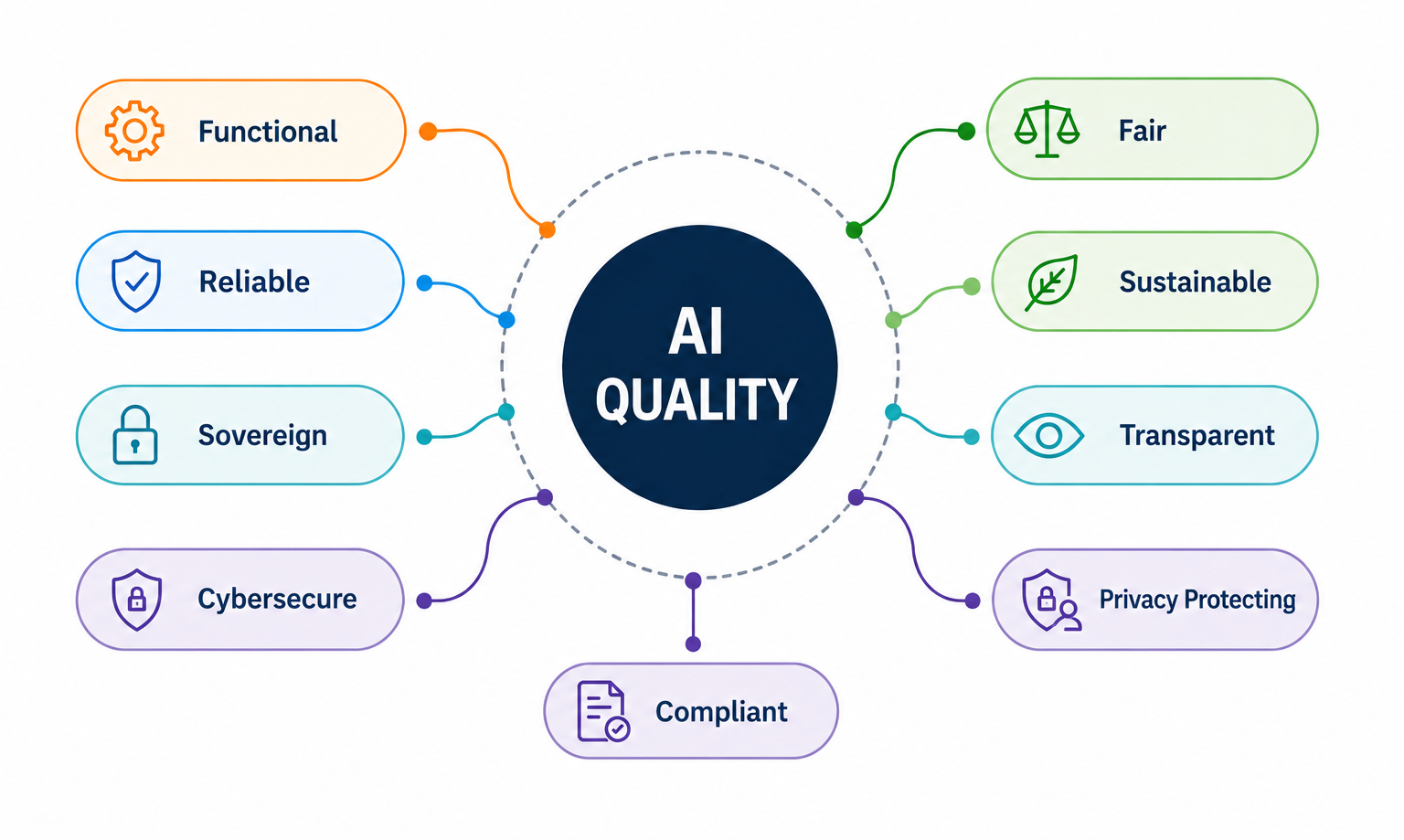
Human-Centered AI is our guiding principle: it is recognized across European regulation and standards as a benchmark for responsible AI development and supports humans instead of replacing them through automation.

Why leiwand
Independent
We assess and report with a neutral lense - independent from tech providers, as we do not build or sell the systems we evaluate.

Research-driven
Our methods are based on active research in the areas of AI evaluation and AI impact assessment, conducted in partnership with academia, public bodies, and private businesses.

Interdisciplinary
AI technology, innovation management, stakeholder and domain integration — all in one team.

Human-centered
We put people and the planet first – because we are convinced that technology has to serve humans & our communities, and not the other way around.

European
EU law, sovereignty and fundamental rights build the ground on which our design principles stand.

Modular & Tailored
Our offer is shaped around your organization's actual needs, from a single module to a full program.


Grounded in Research and Industry Best Practice
We emerged from a research project developing fair-by-design AI systems: detection and mitigation of algorithmic bias from first principles. Building on this foundation, we have continuously expanded our work, venturing into the full spectrum of quality and trustworthy AI.
We now lead and contribute to funded European research projects and international standards, expanding our horizons by working with partners to ensure AI quality.
Technologies we work on
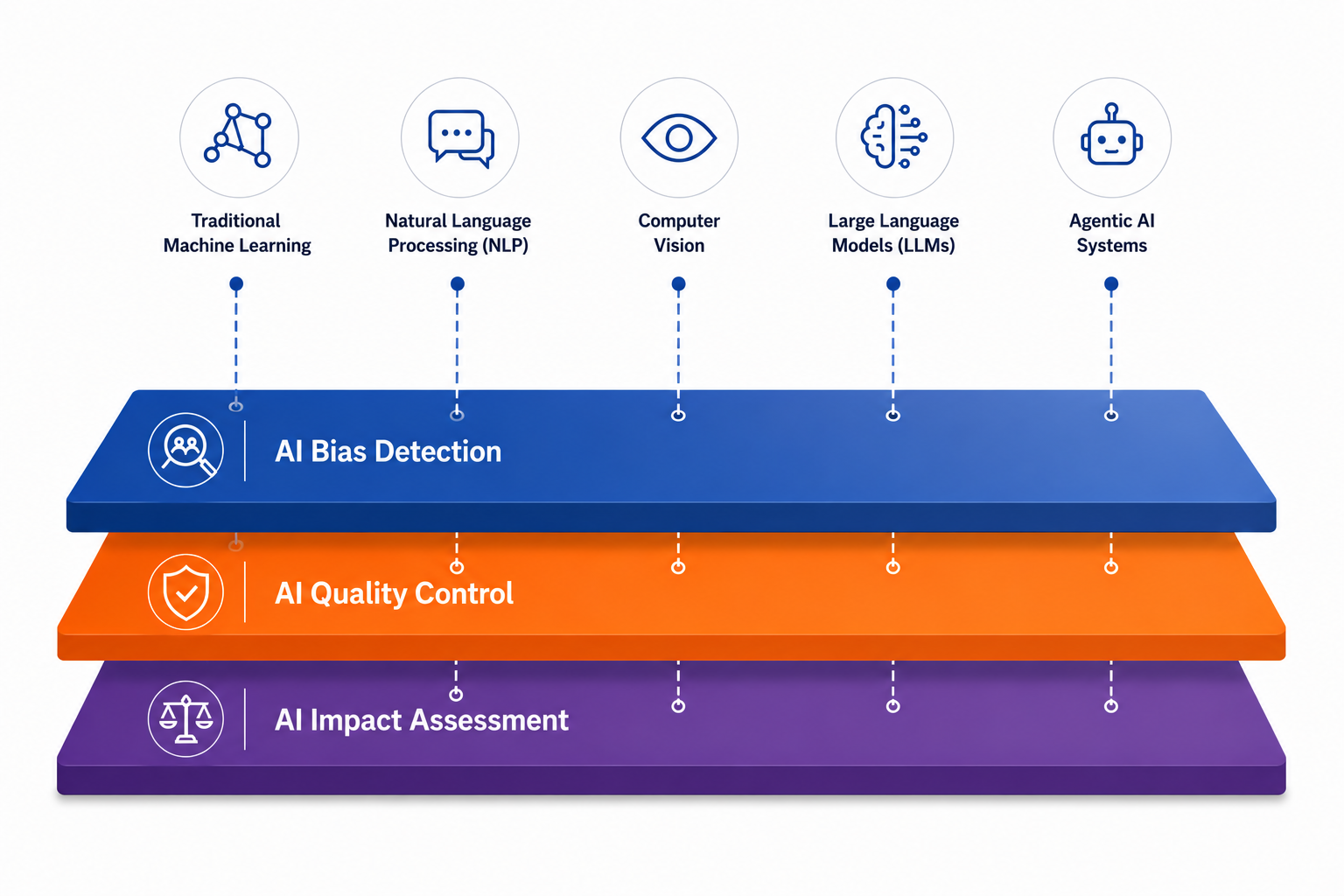
We do bias detection, fundamental rights impact assessments and quality control on AI technologies, spanning traditional machine learning, NLP, Computer Vision, to LLM and agentic systems.
Whether you are implementing AI governance for the first time or extending an existing quality management system to meet the requirements of the EU AI Act, navigating the growing landscape of AI standards and regulations can be challenging.
Through our involvement in international research and standardization activities, we know which standards and regulation will become important in the near future.
We use this knowledge to help organizations identify which standards are truly relevant for their AI systems—including those supporting the presumption of conformity under the EU AI Act—and translate them into practical, efficient implementation.
Standards and regulations we work with or contribute to:
-
A European standard being developed by CEN-CENELEC to define concepts, measures, and requirements for assessing and mitigating bias in AI systems.
-
ISO/IEC 12792: This standard establishes the first globally standardized taxonomy for artificial intelligence transparency. It outlines structured information elements that help organizations communicate AI capabilities, risks, and design decisions, defining how information is shared across supply chains, to end-users, and with regulators.
-
HUDERIA is the Council of Europe's framework for assessing the impact of Artificial Intelligence systems on human rights, democracy, and the rule of law. It serves as a practical guide for governments and developers to evaluate and mitigate the societal risks associated with AI.
-
The EU AI Act is the world’s first comprehensive legal framework for artificial intelligence, enacted by the European Union to ensure that AI systems are safe, transparent, non-discriminatory, and respect fundamental rights. It applies to any developer, deployer, or distributor whose AI systems are placed on the EU market or affect EU citizens.
Standards included here are EN 18286 (Quality Management), EN 18228 (Risk Management), EN 18284 (Data Quality and Governance), EN 18229 - 2 (Transparency), and EN 18229-4 (Accuracy).












Our Partners and Clients
Research Project fAIrbydesign
OSCE - Artificial Intelligence & Freedom of Expresssion
Asigmo Instructor of Intensive Course on Trustworthy AI
Stifterverband
Big Data, algorithm and AI: Data-driven research in science 2030
Austria Wirtschafts Service - Open Innovation Strategy for Austria
Stifterverband

OSCE - The Representative on Freedom of the Media